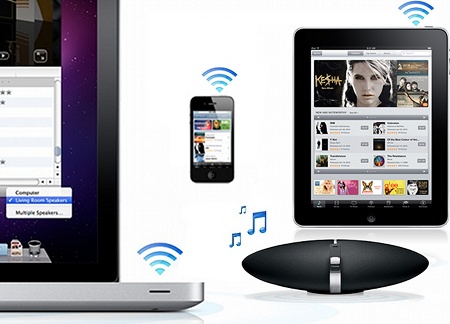
AirPlay 2 is a mayor update that is released with iOS 11. It brings features for grouping compatible speakers in zones, in Apple’s Home app, and the ability to control them with different music from one device. You can also play the same music on all of them.
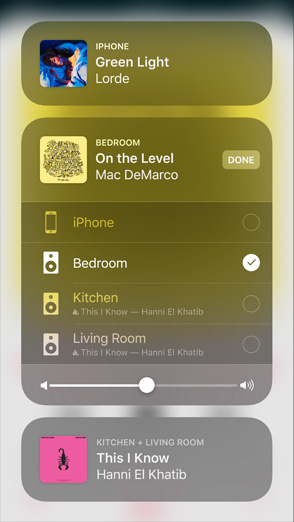
Not all AirPlay speakers are compatible with AirPlay 2 and those that are will have to be updated to enable AirPlay 2. Apple HomePod has it. AirPlay 2 fixes much of the issues with AirPlay and makes Apple a serious player in the multi-room field. If you are considering buying a new speaker, make shure it is compatible with AirPlay 2 and not just AirPlay.
AirPlay
AirPlay is a technique developed by Apple Inc. that allows wireless streaming of audio, video and photos between devices. An iPad, iPhone or a computer running iTunes server streams the music to an Apple TV, AirPort Express, standalone speaker or a compatible receiver.
So if you have an iPhone (or other iDevice), AirPlay is a great way to easily play the music on it through a receiver and even control the volume and turn the receiver on. You can also show photos and play some videos and games that way which is added value. Third-party apps like Spotify and Youtube can also send audio and video streams over AirPlay. The iTunes Remote app for iOS can be used to control media playback from a Mac to selected streaming devices.
Since AirPlay streams the content from your iOS device to the speaker/receiver, it does take a battery toll on your iOS device.
Multi-room support
Before you build a multi-room solution based on AirPlay you should know of the limitations. AirPlays biggest disadvantage compared to Sonos and Squeezebox is that you can’t play different songs in different zones at the same time from one device (which is a core requirement for many multi-roomers). You can’t even play the same song in all zones from an iOS device, only from a computer running iTunes server.
However, there are a few ways to add some multi-room functionality. Whaale let’s you stream local music (iTunes, not in apps like Spotify) on your iOS device to different speakers. Different songs to different speakers at the same time.
You can install the Airfoil program on a Mac that acts as a proxy that sends the AirPlay music from your iOS device to as many speakers as you want. But it can’t send different music to different speakers.
AirPlay devices
AirPlay wireless technology (receiver mode) is integrated into wireless speakers, speaker docks, AV receivers, and stereo systems from companies such as Naim, Marantz, Bose, Yamaha and Denon. Song titles, artists, album names, elapsed and remaining time, and album artwork can appear on AirPlay-enabled speakers with graphical displays.
Simple AirPlay system
Buy a Denon Heos 3 Wireless Speaker
Advanced AirPlay system
For music, buy an AirPlay receiver like the Marantz Melody, Bose SoundTouch SA-4 or the Yamaha RX-V677 7.2-channel Wi-Fi Network AV Receiver with AirPlay
For music, images and audio buy an Apple TV and pair it with a receiver without AirPlay.
If you want wired speakers from a centralized hub that manages multiple zones, you can check out the AirHome system.
AirPlay to existing sound system
If you have an existing HiFi system that you want to AirPlay to, the simplest way to get started is to buy an Apple AirPort Express and connect it to your existing HiFi system/receiver trough its audio out (optical and analog).
If you also want to stream images, video and games, buy an Apple TV instead.
Both of them require a receiver to play audio with quality. Audio through a TV will also work with Apple TV and computer speakers will work with the analog 3.5mm out on the AirPort Express but usually not optimal sound quality in those cases.
Alternative solutions
The new Raspberry Pi 3 with integrated WiFi can AirPlay with Max2Play, as can the Raspberry Pi 2. You can also get AirPlay on them by adding Shairport or Kodi to a standard Raspbian image.
Turn a PC into an AirPlay device with AirServer. Xbox one has an AirServer app that enables Airplay on it. Even though it has low ratings. The discontinued device Boxee box from D-Link supports AirPlay. The Sonos multi-room system is AirPlay compatible, if connected to an AirPort Express.
Read more about AirPlay
Here is a list of all blog posts about AirPlay solutions.
AirPlay example
1. Connect an iPhone to the local wireless network.
2. Make sure the receiver device is attached to the network through wireless or ethernet.
3.Start a music app on the iPhone and look for the AirPlay logo.
4. Press the logo and select output device.
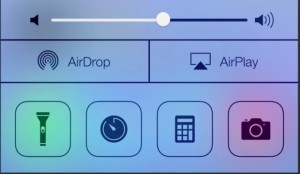
In iOS 7 and later, you can always reach the AirPlay button in the control center that displays when swiping from bottom and up.
Peer to peer
iOS 8 brought the ability to AirPlay directly to an AppleTV without a network, via peer to peer. Similar to how AirDrop works.
Faster in iOS 9, with compatibility issues
Apple has improved overall performance of AirPlay in iOS 9 which makes it faster and easier on the battery. Unfortunately some 3rd party AirPlay devices has stopped working in the process, as noted in the comments section below this article.
AirPlay defaults to mirroring in iOS 10
Due to changed layout, AirPlay mirroring is the default instead of AirPlay audio. Read more on Reddit.
iOS 11 introduces AirPlay 2
It has multi-room features like grouping compatible speakers in zones, the ability to control them with different music from one device and play the same music on all of them (party mode).
I really like your website as streaming audio around the house is a great techy feature. Being mainly and Airplay chap, the other features of the Airport Express are also useful for many households to allow Printer network share for USB printers and also for extending the existing WiFi coverage to more remote areas of the house or creating. With the use of Airfoil I get by for all sources of music on the laptop. From Linux Ubuntu/Bodhi I have not found a stable connection to Airplay and usually requires terminal knowledge. iOS is also fine except for the non multiple speakers option (which I am told is due to conserving battery life). Android is still not entirely their yet, although I am testing Honey player app. For traveling the Airport Express is ideal for a quick mobile office setup. Another thing I have found is the high audio delay with audio taken through the Airport Express so watch out for lip sync issues when separating out the audio.
An average 2.1 sound system does not require the power or sophistication provided by a receiver and the results are for everyone to see. Damp low tones and weak highs are annoying to most audiophile who has high tastes in music cannot tolerate such performance from their home theatre systems which is why they insist on buying an AV receiver of the highest quality. Sans the amplification only two channels and the subwoofer works whereas with the receiver in the scene, sound starts streaming out of all the channels including those that you never existed unless!
at the beginning of August 2013 a new iPad-app was added to the iOS-app-store that allows to overcome some of the “problems” described for the Airplay solution.
Basically, the app allows to
– stream music directly from the iPad to one or multiple Airplay speakers at the same time – real multirooming sound without the need for an additional Mac or PC (all you need is a WLAN, the iPad and the speakers).
– The app also plays multiple sources on multiple speakers simultaneously.
It is called the
WHAALE Multiroom Player
(https://itunes.apple.com/us/app/whaale-multiroom-player/id663776918?mt=8)
and it comes with a neatly designed UI…
And as mentioned, most of the network-related problems can be solved by configuring the WLAN-router/Airport-Express properly (or connecting at least some of the speakers via LAN) – see also http://www.whaale.com/index.php/technical-support/item/41-configuration for the experiences we made during the app development).
Currently, the app only supports playing music from the local iTunes library, but other music sources are planned (internet radio, network streaming, Spotify, …).
Apple may have “improved” AirPlay with iOS9, but since they revisited the whole protocol, it’s now BROKEN with third party hardware. I have a little Sitecom streamer to connect whatever speakers to it, and airplay. None of my devices on iOS9 can stream to it. iOS8 is fine. It’s called progress 🙂
You can also use Reflector 2 as a way to turn your Mac or Windows computer into an AirPlay device. It’s compatible with both iOS and Android devices. You can mirror and record multiple devices at once, live stream to Youtube, use voice-over recording for tutorials or demonstrations and even have access to extended security features. It’s a seamless way for you to share your device screen to the big screen.
I have been using Airplay for multi-room music for over a year and I love it! I have 3 Apple TVs connected to AV stereos and I also have 2 Airplay enabled iHome (iW3) portable speakers. I use my Mac to select which speakers to play and I can independently control the volume levels for each speaker/stereo via the Mac. My main music source is the Apple Music subscription service which gives me a nearly limitless selection of music. It’s nice to have music streaming to all 5 locations during parties so we can walk around the house and her music everywhere!
I highly recommend using an Apple Airport Extreme wifi router. When I first started using Airplay for multi-room I had a different router. I frequently lost connections and had drop-outs and I also had to re-start my iHome portable speakers every time I used them to get them to reconnect to wifi. But since switching to the Airport Extreme my devices stay connected and the music is much more reliable. I still have occasional connection problems, but it is much rarer.
Another issue I ran into was being limited to controlling music from my Mac. I searched for apps that would allow me to Airplay to multiple speakers from my iPhone but none of the ones I have found are compatible with Apple Music. They only work with purchased music that is stored on your phone. However, I found that I can use the Apple Remote App to control what is playing via my iPhone. I first have to startup Apple Music on my Mac, but from there I can use the Remote app to control what is playing. It has some limitations, but it is the best solution I have found. The main problem is I cannot search for and play a song from Apple Music. I can only play from songs on my playlists. If I want to play a song that is not on one of my existing playlists, I have to go back to the Mac to search for it. Hopefully Apple will solve this problem and give me full control from my iPhone just like I get from my Mac.
Airplay is truly a great tool and it continues to amaze me that Apple hasn’t hyped it up!